Tuesday, 24 July 2012

When someone great is going

Mizhenka is moving to somewhere-else-in-London. This is bad, for us if not for her.

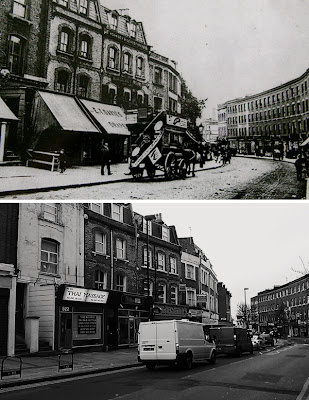
Take a look at her blog to see Upper Holloway looking as beautiful as it can and scroll down to see the Hornsey Road through her eyes and her many cameras.

Elthorne Park


View from window


Redscale view from window


1900/2012


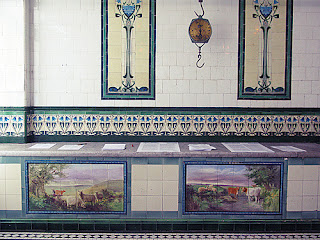
W Plumb butcher's shop


This creates a vacancy for the Hornsey Road official photographer post. Don't suppose you'd like to apply?


Sunday, 22 July 2012

Listen carefully

I promised you an upbeat post. This one isn't kittens and ice-cream, but it is about something that makes me glad. Last week an anonymous commenter who goes by BNWY3K on Soundcloud posted this link to their Hornsey Road music.

The piece is built around a recording of a drawn-out argument with a man and woman shouting at each other as his voice gets ragged and hers scornful. It won't solve anything. They've had rows like this before and will again. The voices drift in and out against a slow, claustrophobic haze that loops around like fights do when people are tired and drunk. It sounds how walking through London on a hot day with too many things on your mind feels.

If you've got any, tell me about your Hornsey Road limericks, etchings, raps, clerihews, cyanotypes, jokes, sermons, lomographs, ballads, etc... If you haven't got any, then for goodness' sake hurry up and make some. Tsk.
Wednesday, 18 July 2012

The station that vanished.

The Goblin line from Gospel Oak to Barking stopped opposite Jubilee Hall from 1872 until 1943 when they closed Hornsey Road Station and demolished the station building. I don't know how that helped win the war, but it must have made sense to someone somehow.

Crouch Hill Station. Hornsey Road's would have looked about the same. 

I've been looking to write a story about it for months but could find nothing anywhere about Hornsey Road station. Not a mention in Hansard, not a local paper reference. It barely makes the National Railway Museum and they are thorough.

National Railway Museum archive. I love them more than I can say for this picture.


So that has to be the story: the station vanished. Two years after Dickens died bricklayers and architects and plasterers and signal-makers and a dozen more forgotten trades made a station and seventy one years later it went.

We're back on the all flesh is as grass theme. I promise Sunday's post will be upbeat.